


Chat with us, powered by LiveChat

Is Chargeback Insurance Worth It? The Math Says No!

Chargeback insurance vs fixing the cause of chargebacks: the real math for merchants

If you are here, chargebacks are costing you money and you want it to stop. Chargeback insurance looks like the fastest way to make that happen: pay a monthly fee, and the provider covers the losses. It feels like a quick fix. It is not. It is a subscription to your own problem. You keep paying, the disputes keep coming, and the one number that can actually shut down your account keeps climbing while the policy does nothing about it. We do not sell insurance, so we have no reason to spin this. Here is the math, and the faster way out.


The choice, in one line each
Buy insurance Find the cause
Pay a premium forever Fix it once
Premium exceeds expected payout by design Cost approaches zero
The problem persists The problem ends
Your chargeback ratio keeps climbing Your ratio falls

Why you are losing money to chargebacks

Every chargeback costs you more than the sale. You lose the product or service, the transaction amount gets pulled back, and your processor charges a chargeback fee on top, usually 15 to 40 dollars per dispute. Industry data puts the true cost of a disputed dollar at roughly 3.75 to 4.61 dollars once you count the lost goods, the fee, and the labor. In e-commerce the average dispute runs around 315 dollars, all in.

So the instinct to make it stop is right. The question is only whether you stop the bleeding or just bandage it every month. Insurance is a bandage. It reimburses some of the loss and leaves the wound open.

How chargeback insurance and chargeback protection actually work

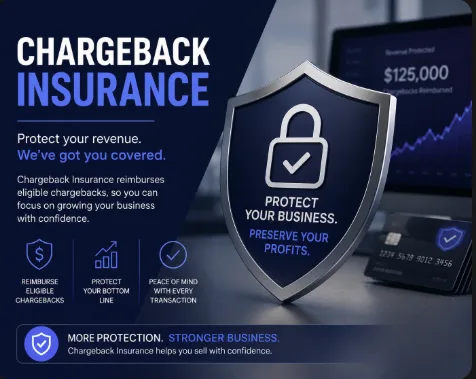
Chargeback insurance, sometimes sold as chargeback protection or a chargeback guarantee, is exactly what it sounds like: an insurance product. You pay a recurring fee, usually a percentage of the card volume the provider agrees to cover, and in return the provider reimburses qualifying fraud losses and sometimes handles the dispute paperwork.

Like any insurer, the provider has to collect more in premiums than it pays out in claims. It funds a claims team, technology, and a profit target from your premium. The price is built to exceed, on average, the losses you would have absorbed yourself. That is not a criticism of the vendors. It is how insurance has to work to exist.

Why the premium always exceeds the payout

Here is the arithmetic the sales page skips. The numbers are illustrative, but the structure holds at any size.

Take a business running 2 million dollars a year in card volume with a chargeback rate of 0.4 percent, near the current e-commerce average. That is 8,000 dollars a year in disputed volume, the most the provider could ever pay you.

Now the premium. Guarantee products commonly price between 0.3 and 1 percent of protected volume, risk-adjusted. Call it 0.5 percent. On 2 million dollars, that is 10,000 dollars a year.

You would pay 10,000 dollars to insure 8,000 dollars. Before a single exclusion, the premium already exceeds the largest payout you could ever collect.

It has to. That gap is the provider’s margin, and it is the entire business model. Run it on your own numbers: your disputed volume per year equals your card volume times your chargeback rate, and your premium equals your card volume times the provider’s rate. For most low-to-moderate-risk merchants, the second number is bigger. By design.

What chargeback insurance policies exclude

The 8,000 dollars above assumes every dispute gets covered. They do not, and this is where the value quietly leaks out.

The biggest exclusion is friendly fraud, a real customer who received the goods and disputes anyway. Roughly 75 percent of e-commerce disputes are friendly fraud, and many policies exclude it or make you fight it separately, because a provider cannot underwrite a customer changing their mind. Common carve-outs also include card-not-present transactions outside the provider’s approval flow, disputes where required evidence is missing, orders the provider declined to approve in the first place, and category caps that stop coverage short of your worst month.

Put the exclusions back into the example. With friendly fraud carved out, the policy realistically covers closer to 2,000 dollars of true third-party fraud, not 8,000. You would be paying 10,000 dollars a year to insure about 2,000. The premium did not move. The coverage shrank.

Insurance does not fix your chargeback ratio, and the ratio is what ends your business

This is the part no insurance vendor will tell you, and it is the one that matters most.

Chargeback insurance reimburses the dollars. It does nothing about the dispute itself, and the dispute still counts against your chargeback ratio with the card networks. That ratio, not the dollar loss, is what gets accounts fined and terminated. The thresholds tightened in 2026:

1.5%Visa VAMP flags a merchant as excessive at a 1.5 percent ratio, down from 2.2 percent, effective April 2026. Excessive merchants pay 8 dollars per dispute and risk restrictions and termination.
1.0%Mastercard’s Excessive Chargeback Program flags merchants at a 1 percent ratio across two consecutive months with 100 or more chargebacks, and targets 0.7 percent.

Here is the trap. You buy insurance, the losses get reimbursed, and it feels handled. Meanwhile every one of those disputes is still stacking up in your ratio. The insurance covers the money and hides the trend, right up until you cross a threshold and your acquirer puts you into a monitoring program, starts fining you per dispute, and eventually asks you to leave. Insurance covers the loss but not the ratio, and the ratio is what closes businesses. Fixing the causes is the only thing that moves the ratio down. A premium never will.

The five most common causes of chargebacks, and what each costs to fix

Most chargebacks trace back to a short list of fixable causes. Notice the cost on each one. Almost every fix is a configuration or process change, not a recurring fee.

1An unclear billing descriptor
Customers who do not recognize the name on their statement dispute the charge as fraud. Fix: set a clear, recognizable descriptor with your processor.

Cost to fix: near zero, a settings change

2Slow or difficult refunds
When a refund is hard to get, customers skip you and go straight to their bank. Fix: make refunds fast and easy, and say so at checkout.

Cost to fix: a policy change, no hard cost

3AVS and CVV verification turned off or ignored
This lets through unauthorized transactions that come back as disputes. Fix: enable and enforce AVS and CVV matching in your gateway.

Cost to fix: near zero

4No proof of delivery or service
Without tracking, signatures, or timestamped records, you lose “item not received” disputes automatically. Fix: capture delivery and service evidence on every order.

Cost to fix: minimal

5Recurring charges without clear notice
Subscriptions that renew without a reminder generate “I did not authorize this” disputes. Fix: send renewal notices, state terms clearly, and make cancellation easy.

Cost to fix: minimal, often just an email

Every one of these ends a category of chargebacks permanently. That is what “fix it once” means. That is chargeback prevention, and it is how you actually reduce chargebacks instead of renting coverage for them.

When chargeback insurance does make sense

It is not never, and pretending otherwise would be the same spin the vendors run in reverse. Consider it when you operate in a high-risk vertical with a ratio structurally above 1 percent, when you run thin margins at high volume and are buying predictability against a bad fraud wave more than savings, or when you face a specific third-party fraud pattern a provider’s data network genuinely blocks better than you can in house.

Notice the pattern: those are cases where you are buying volatility protection or network data, not cases where the premium-versus-payout math flipped. It almost never flips. And one distinction worth keeping straight: a chargeback management service that only charges when it wins a dispute for you is a different animal from a flat insurance premium. If your problem is friendly fraud, a pay-when-you-win service can pencil out where a fixed premium does not, because you are not pre-paying for losses that may never come. Even in these cases, insurance is a supplement to fixing the causes, never a substitute. It does not lower your ratio.

Two reasons to control your chargebacks, and a faster win in the same place

There are two reasons to get your chargebacks under control. We just covered the first: let the ratio climb and you can lose the right to accept credit cards at all. The second is simpler. Every dispute you lose is revenue you earned and do not get to keep.

Fixing the causes above is worth doing, and you should do it. Be honest with yourself, though: it is not a fast fix. A cleaner descriptor, tighter verification, better delivery proof, they all work, but they play out over months as your ratio settles back down.

Here is the faster win, and it is hiding in the same place your chargebacks are: your processing statement. The credit card processing industry is unregulated, and unvalidated fees get pulled straight out of business bank accounts every month, with no invoice and nobody checking. See it for yourself in The Keys to the Kingdom, where you can watch exactly how it happens.

Fixing your disputes is a project. Getting your credit card processing fees audited, and getting your processor to stop overbilling you, is not. As America’s #1 Credit Card Processing Auditing Firm, we can usually have it done in three to four weeks or less, and depending on your situation you may even get a check back for what you were already overcharged.

The audit is free. If there is nothing there, you spent five minutes to find out.

“In business, this is the biggest no-brainer there is.”Kevin Harrington, original shark on Shark Tank

Find out what your processor is really pulling from your account. The audit is free, and it takes about five minutes to start.

Get a free auditor call 800-672-1292

Frequently asked questions

Is chargeback insurance worth it?
For most low-to-moderate-risk merchants, no. It is insurance, so the premium is priced above your expected losses by design, and it does nothing to lower the chargeback ratio that triggers network fines and account termination. It can be worth considering in high-risk verticals or against a specific fraud pattern, but only as a supplement to fixing the causes, never a replacement.
How much does chargeback insurance cost?
Guarantee products commonly charge 0.3 to 1 percent of protected card volume, adjusted for risk. On 2 million dollars in volume that is roughly 6,000 to 20,000 dollars a year. Compare that to your actual disputed volume, which is your card volume times your chargeback rate. For most merchants the premium is larger.
How much do chargebacks actually cost me?
More than the sale. You lose the goods or service, the amount is reversed, and your processor adds a chargeback fee of about 15 to 40 dollars. Industry data puts the all-in cost near 3.75 to 4.61 dollars per disputed dollar, and around 315 dollars for the average e-commerce dispute.
What is a good chargeback ratio?
Keep it well under the network limits. Visa’s 2026 VAMP program flags merchants as excessive at a 1.5 percent ratio, and Mastercard’s Excessive Chargeback Program flags 1 percent over two months with 100 or more chargebacks and targets 0.7 percent. Aim to stay under about 0.7 to 0.9 percent to keep clear of monitoring, per-dispute fines, and termination.
What is the difference between chargeback insurance and a chargeback management service?
Insurance is a flat premium you pay whether or not you have losses. A chargeback management service typically charges only when it wins a dispute on your behalf. If your problem is friendly fraud, the pay-when-you-win model can make sense where a fixed premium does not.
How do I reduce chargebacks without buying insurance?
Fix the causes: a clear billing descriptor, fast refunds, enforced AVS and CVV, proof of delivery on every order, and clear notices on recurring charges. Then audit your statement to confirm you are not being overbilled on the chargeback fees you already pay. That lowers both the losses and the ratio, which insurance never touches.

Subscribe to insights Read more Insights Submit an article idea


Read More

Check out our other insights here

Warning If You Use Bank of America For Credit Card Processing

View

Do You Have Risk Fees On Your Credit Card Processing Statement?

Man reading credit card processing statement

View

Want to talk?

As seen on