



Chat with us, powered by LiveChat

Why Monitoring Your Credit Card Processing Statement Is Critical

If you want a fee reduced or removed, you can call your processor and just ask. Most of the time they say yes. Why would they not? You checked a box on your to do list, you feel like you won, and the matter is now in your rearview mirror.

This was probably your first rodeo. It was their ten thousandth. They do this all day, every day, and they have for years. There is a reason these companies make billions, and it is not that they roll over when a merchant calls.

The part that matters
Most merchant agreements give you about thirty days to dispute a new or increased fee. Miss that window and the fee stops being a mistake you can argue about. It becomes a term of your agreement.

The fee comes off. Then a different one appears.

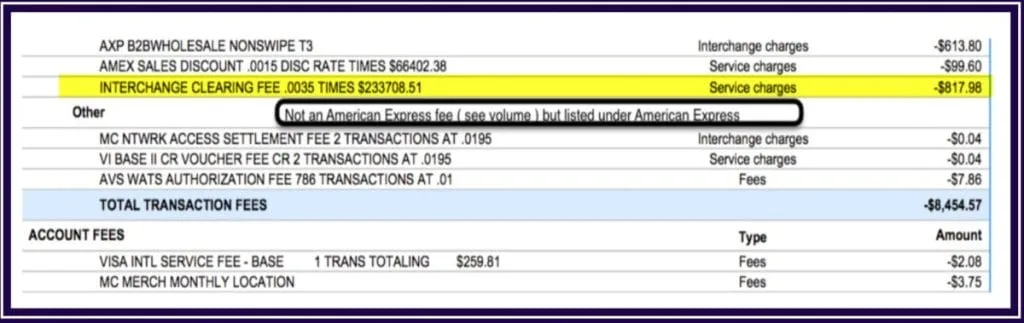
Say you spot a bogus line item. An “Interchange Clearing Fee,” costing you 0.15%, like this one.

Merchant statement line item reading Interchange Clearing Fee, charged at 0.15 percent

You call. They say “no problem” and take it off. Everyone is happy.

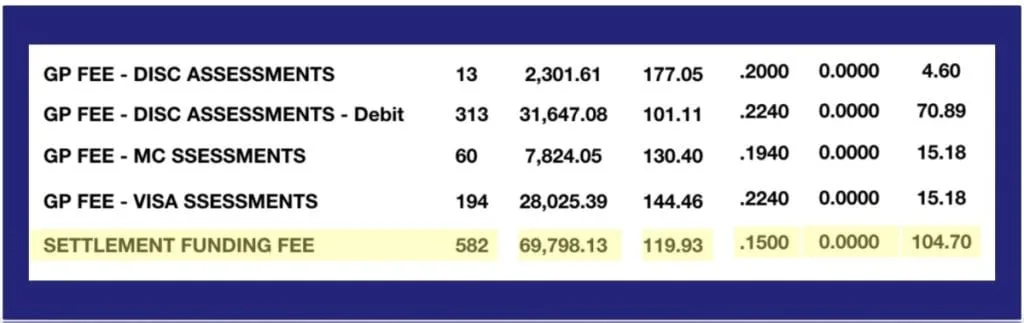
Fast forward a few months. Now there is a “Settlement Funding Fee” on the statement instead.

Merchant statement line item reading Settlement Funding Fee, also charged at 0.15 percent

Same 0.15%. Different name. And this one has been sitting there for a couple of months already, which changes the conversation entirely.

Maybe they remove it again to keep you calm, and try again next month. Maybe they tell you this one cannot be removed. Or they point you back at your merchant agreement and say, read page one.

What page one actually says

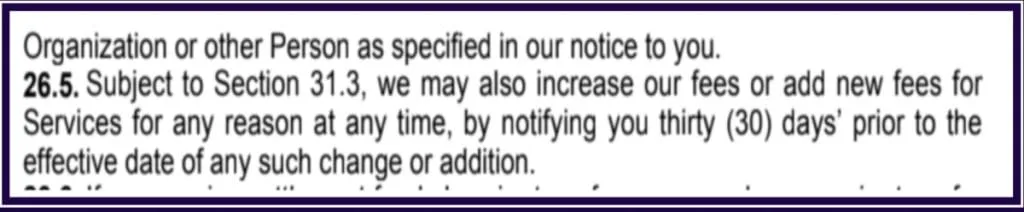
It says they can increase your fees, and add new ones, for any reason.

Merchant agreement clause permitting the processor to increase existing fees and add new fees for any reason

Read that slowly. Not for a cost increase they can point to. Not when the card networks change something. For any reason.

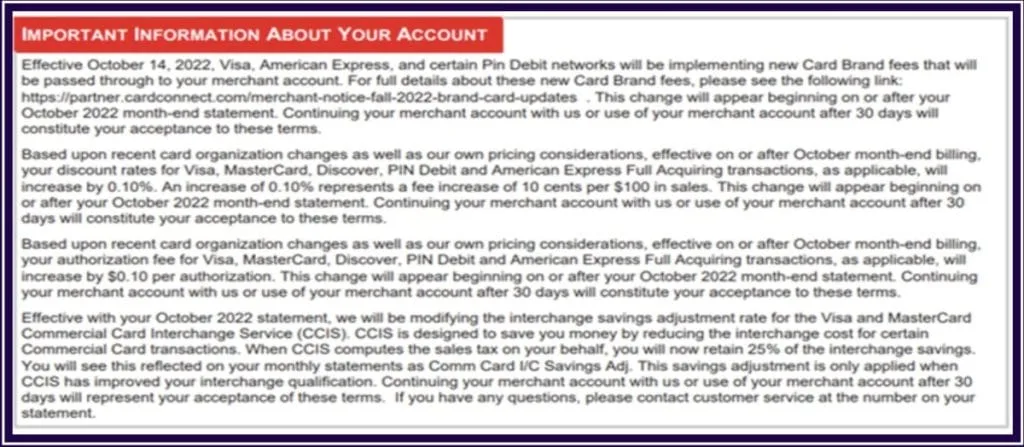
Then it gets worse, because of the clause underneath it.

Merchant agreement clause stating that continuing to use the account after thirty days means the merchant accepts the new or increased fees

By continuing to use the account after thirty days, you have agreed. The new fee is no longer something they did to you. It is something you accepted, and it is now part of the agreement going forward.

Why thirty days is the whole game

Two things happen when that window closes, and the second one is the expensive one.

The first is that you lose the money already taken. That is annoying, and on a small fee it is survivable.

The second is that the fee is now baked in. It keeps charging every month, on every batch, for as long as you stay. A fee of 0.15% sounds trivial until you run it against a year of volume, and it does not stop on its own. Nobody at the processor is going to call and remind you it is there.

This is also why the “we removed it, no problem” call is less of a win than it feels. Removing one fee does nothing to the clause that let them add it. The clause is still there, and so is the next fee.

What to check on every statement

You do not need to understand every line to catch the changes. You need to notice what is different from last month.

  • Any line item that was not there last month. New names are the tell. A fee that has been renamed is not a new fee, it is the same fee wearing a different hat.
  • Any rate that moved. Compare the percentages side by side, not the dollar totals. Volume changes month to month, so the dollars move for innocent reasons and the rate does not.
  • Your effective rate. Total fees divided by total volume. One number, one minute, and it catches things a line by line read misses.
  • Anything you cannot name. If you cannot say what a fee buys you, that is worth a question. Our statement decoder covers what most of these line items actually are, and the glossary covers the terminology.

If you want the longer version of how the pricing is built in the first place, and why some of these names sound official when they are invented, read credit card processing fees explained.

This is what monitoring is for

A one time audit finds what is on the statement today. It does not stop what lands on the statement next quarter, and the clause on page one guarantees something eventually will.

Monthly monitoring exists because the thirty day window is the only leverage the agreement gives you, and it only works if somebody is actually watching. We catch the overbillings, get the money returned, and make sure you are not quietly signed up to a worse deal going forward.

Kevin Harrington, from Shark Tank, on what we do: “This truly is a no-brainer.” He also said “weAudit is the only company that EVERY company needs.”
Find out what changed on your last statement
Send us a recent statement. We will tell you what every line on it is for, and which ones showed up without anyone telling you.

Get Your Free Audit

Get Your Free Audit  |  Schedule A Free Consultation

Subscribe to insights  |  Read more Insights  |  Submit an article idea

Read More

Check out our other insights here

Bank of America Credit Card Processing: What It Costs and What to Watch

Bank of America logo

If Bank of America handles your credit card processing, go and pull your last three statements before you read any further. We have watched accounts at that bank move from four basis points to over forty, and the businesses paying it were told the new


View

Do You Have Risk Fees On Your Credit Card Processing Statement?

Man reading credit card processing statement

Do you have a “Risk Fee” on your credit card processing statement?

No? Good. You are luckier than a lot of merchants, and you should keep reading anyway.

View

Want to talk?

As seen on